Narrow Balcony, Cozy Escape!

Vivienne
| 31-08-2026
 · Lifestyle Team
A narrow balcony may not offer much floor space, but that does not mean it has to feel cramped or overlooked. With the right furniture, colors, lighting, and greenery, even a slim outdoor area can become a pleasant place to sit, read, enjoy a quiet morning, or unwind at the end of the day.
The secret is to make every part of the balcony work without filling it with unnecessary items.
Measure Before Choosing Furniture
The first step is to understand exactly how much space is available. Measure the balcony's length and width, and take note of doors, railings, walls, and any fixtures that could affect furniture placement.
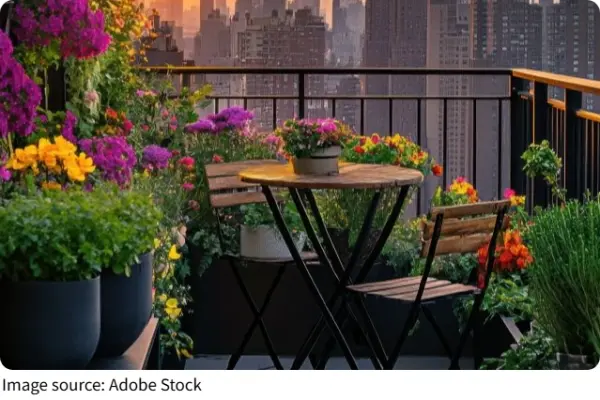
For a narrow layout, choose pieces that leave enough room for movement. A compact bench, slim café-style table, or folding chair can provide seating without taking over the entire floor. Furniture with a small footprint is often more useful than oversized pieces, even if the balcony itself is relatively long.
Use the Walls and Railings
When floor space is limited, look upward. Vertical surfaces can provide valuable room for decoration, storage, and greenery without reducing walking space. Wall-mounted shelves can hold small plants, lanterns, or decorative objects.
A narrow vertical garden feature can also add greenery while using very little floor space. Depending on the balcony's design and local building requirements, railing planters may provide another way to introduce greenery. Vertical design helps a narrow balcony feel less crowded. Instead of spreading items across the floor, arrange selected features upward to create visual interest.
Choose Multifunctional Furniture
Multifunctional furniture can be especially helpful in a small outdoor area. A bench with built-in storage, for example, can provide seating while creating a place for cushions, blankets, or other balcony accessories.
Folding furniture is another practical choice. Chairs and tables can be moved or stored when more open space is needed. Lightweight pieces can also make it easier to change the layout according to different activities. Avoid buying furniture simply because it looks attractive. Each piece should have a clear purpose and fit comfortably within the available space.
Create a Comfortable Color Scheme
Color can influence how spacious a narrow balcony feels. Light and neutral shades can create an open appearance, while a few deeper tones can add character without overwhelming the setting. Try coordinating the furniture, cushions, outdoor rug, and greenery rather than using many unrelated colors. Soft beige, cream, gray, muted green, or light wood tones can work well together.
Add Greenery Without Overcrowding
Plants can make a balcony feel more inviting, but too many large containers can quickly reduce usable space. Select greenery according to the available sunlight, wind exposure, and amount of care it requires. Use a combination of sizes and heights to create depth. A taller plant can occupy an unused corner, while smaller plants can sit on a shelf or narrow table.
Add Soft Details Carefully
Cushions, an outdoor rug, and comfortable textiles can make a small balcony feel more welcoming. However, too many soft furnishings can make the area appear cluttered.
Choose a limited number of pieces in coordinating colors and patterns. A single outdoor rug can help define the seating area, while one or two cushions can add comfort without taking up much room. Make sure fabrics and rugs are intended for outdoor use, particularly if the balcony is exposed to moisture or strong sunlight.
Keep the Floor as Open as Possible
One of the most effective ways to make a narrow balcony feel larger is to preserve visible floor space. Avoid placing unnecessary storage boxes, oversized containers, or decorative objects along the walking route.
Arrange furniture toward one side when the layout allows it. This can create a clearer passage and make the balcony feel more organized. Keeping the floor tidy also makes regular cleaning easier.

A narrow balcony can become a beautiful retreat when space is treated as an advantage rather than a limitation. With a thoughtful layout, even a slim balcony can become a practical and enjoyable extension of the home.