All Black, No Boredom

Lucas Schneider
| 27-08-2026
 · Lifestyle Team
Welcome back. You'd think throwing on all black would be the easiest thing in the world.
Grab a tee, some jeans, a jacket, done. But most guys end up looking like a walking silhouette at a funeral, or worse, like they just got off a night shift and forgot to change.
The trick isn't the color itself. It's how you let the fabric do the talking when the palette goes silent.
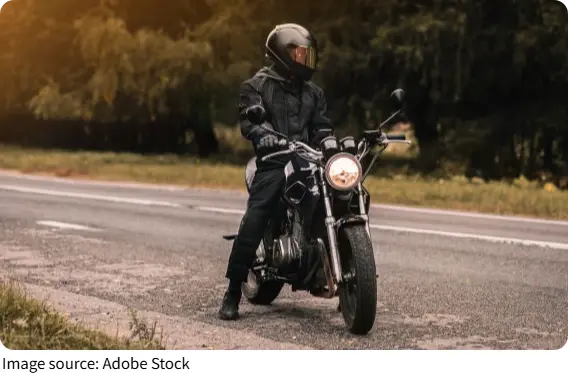
Texture is your only friend
When everything is the same shade, your eyes have nothing to grab onto except surface. So you need to mix materials that feel different before you even get close. Pair a matte cotton tee with a leather jacket, and suddenly the jacket pops without being loud. Throw in some ribbed knit or a brushed flannel under a smooth nylon shell, and the contrast does the styling for you.
The easiest test: stand in front of a mirror and squint. If you can't tell where one piece ends and another begins, you've got a texture problem. A heavy wool overcoat over a thin merino sweater works. So does a chunky cable-knit under a slick bomber. The goal is a visual rhythm, rough against smooth, dense against airy.
Black is not one color
Here's the thing people miss. Black comes in a hundred versions. There's jet black, which is flat and absorbs everything. There's faded black, which leans slightly gray and catches light. There's black with a blue undertone, and black with a brown undertone, and they don't always match.
So when you build an outfit, don't just grab any black pieces. Aim for a slight tonal shift. A washed black denim jacket over a true black hoodie gives you a gentle two-tone effect without breaking the all-black rule. Same with charcoal-black trousers under a deeper black coat. You're not wearing a uniform. You're wearing a family of blacks that happen to get along.
Silhouette breaks the flatness
If every piece fits the same way, you'll look like a black rectangle. That's the boredom you're trying to avoid. Instead, mix the proportions on purpose. A boxy, oversized top needs something slimmer on the bottom, like tapered trousers or straight-leg jeans that hug just a bit. Conversely, if your pants are wide and flowing, keep the top more fitted.
Think of it as giving your body a shape to read. A longline coat over a cropped jacket, even if both are black, creates a line that draws the eye. A tucked-in shirt with a high-waisted trouser defines where your waist is. You're not showing skin, you're showing structure. That's what makes the outfit look deliberate instead of accidental.
Accessories are the quiet spark
You can keep everything black and still add interest with what you put on top of it. A silver chain or a matte black watch catches light at your neckline and wrist. A beanie or a cap changes the shape of your head's silhouette. Even your shoes matter. Black leather boots with a slight shine will read differently than black canvas sneakers with a rubber sole.
Don't overdo it. One or two details is enough. A belt with a visible buckle, a ring, or a pair of glasses with a dark frame all count. The point is to give the eye somewhere to rest, a tiny moment of contrast that breaks the monotony. You're not accessorizing to be flashy. You're accessorizing to prove you thought about it.
Fit matters more than brand
You can spend a fortune on designer black pieces and still look off if the fit is wrong. A $50 tee that drapes well beats a $200 one that bunches at the shoulders. The same goes for trousers. Black hides stains and wrinkles better than most colors, but it does not hide a bad cut. The line of the shoulder, the break of the pant leg, the length of the sleeve. All of it has to be intentional.
If you're unsure, go for slightly relaxed fits rather than tight ones. Tight black clothing can look costumey, especially if the fabric is thin. A little room lets the fabric move and catch light naturally. You want to look comfortable in the outfit, not like you're wearing it for a photoshoot.
So next time you reach for that black tee, pause for a second. Check the texture of your jacket, the tone of your pants, the fit of the whole thing. Layer with intention, add one small detail, and let the fabrics do the work. You'll get the depth you want without ever adding a single color.