Meet the Many Kingfishers!
Mukesh Kumar
| 10-08-2026
 · Animal Team
Readers, when the word “kingfisher” comes to mind, does a flash of blue racing over a river appear in your imagination? That image fits some species beautifully, but the kingfisher family is far more varied than the classic blue-and-orange bird suggests. More than 100 species occupy habitats ranging from quiet streams and mangroves to tropical forests and Australian woodlands.
Some hover above water before plunging after prey, while others rarely depend on water at all. Their bills, plumage, nesting habits, diets, and hunting techniques can differ dramatically. These five species offer a fascinating look at that diversity.
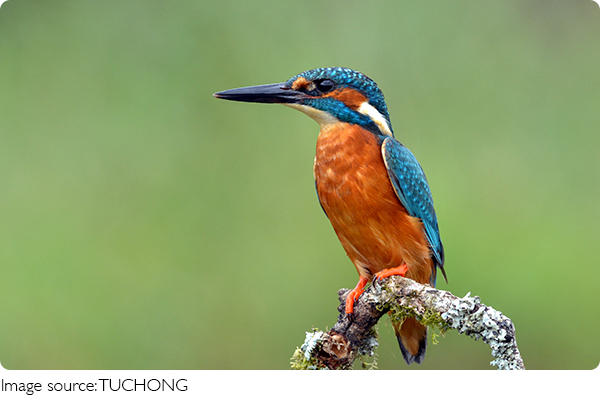
1. Common Kingfisher: A Tiny Hunter With Extraordinary Precision
The Common Kingfisher (Alcedo atthis) is one of the best-known members of the family. Its range stretches across much of Europe, Asia, and North Africa, where it favors clear streams, rivers, ponds, and other freshwater environments. Northern populations may migrate when winter ice makes fishing difficult, while many birds farther south remain in the same territory throughout the year.
Small in stature but unmistakable in appearance, this kingfisher reaches roughly 17 centimeters in length. Electric-blue upperparts contrast sharply with orange underparts, while a pale throat patch adds another flash of brightness. The long, narrow bill is perfectly suited to its hunting style.
A Common Kingfisher usually watches from a low branch or perch before plunging almost vertically into the water. Small fish such as minnows and sticklebacks are frequent targets, although aquatic insects, crustaceans, and small amphibians can also appear on the menu. The bird's eyes have adaptations that help it cope with the visual distortion caused by the water surface, an important advantage during those split-second dives.
2. Belted Kingfisher: The Hovering Fisher of North America
Across North America, the Belted Kingfisher (Megaceryle alcyon) brings a very different appearance and hunting strategy. Its range extends from Alaska and Canada through much of the United States and into Mexico. Depending on local conditions, some populations migrate southward during colder months.
At up to about 36 centimeters long, it is considerably larger than the Common Kingfisher. One especially interesting feature is the difference between the sexes: females generally display a chestnut-colored band, making them more boldly marked than males.
Instead of simply perching beside water, Belted Kingfishers often patrol above it. A bird may hover in place, beating its wings rapidly while concentrating on a potential target below. Once the moment is right, it drops toward the surface and captures fish, crayfish, aquatic insects, and other small prey.
3. Common Paradise Kingfisher: A Forest Specialist in Brilliant Colors
The Common Paradise Kingfisher (Tanysiptera galatea) demonstrates that a kingfisher does not need to live beside an open stream. Native to parts of New Guinea and nearby islands, it occupies humid tropical forests where dense vegetation creates an entirely different hunting environment.
This species reaches approximately 26 centimeters and is considerably lighter than the Belted Kingfisher. Its striking combination of blue, green, red, and other vivid tones makes it particularly eye-catching among forest birds. The elongated tail streamers found in paradise kingfishers add another distinctive feature. Instead of relying mainly on fish, it hunts terrestrial prey. Beetles, caterpillars, earthworms, and other invertebrates can be seized from vegetation or the forest floor, with small reptiles occasionally joining the diet.
4. Pied Kingfisher: The Black-and-White Acrobat
The Pied Kingfisher (Ceryle rudis) is instantly recognizable for its crisp black-and-white plumage and dramatic hovering behavior. Its range spans parts of Africa, the Middle East, and South Asia, where it occurs around rivers, lakes, reservoirs, estuaries, and coastal waters. This bird can reach around 29 centimeters in length. Its powerful, straight bill is designed for grabbing aquatic prey, particularly fish, although crustaceans and aquatic insect larvae may also be taken.
Its signature technique is hovering. A Pied Kingfisher can face into the wind and remain suspended above the water while searching below. Once prey is located, it folds its wings and dives with remarkable accuracy. Breeding pairs commonly excavate tunnels in sandy or earthy banks. Courtship can include aerial displays, vocal exchanges, and the male presenting food to the female. Suitable nesting banks are therefore an important resource, not merely a convenient location.
5. Laughing Kookaburra: The Kingfisher That Left the Water Behind
Few members of the kingfisher family challenge expectations quite like the Laughing Kookaburra (Dacelo novaeguineae). Native to eastern Australia, this large bird has also been introduced into other areas, including parts of western Australia, Tasmania, and New Zealand.
Reaching roughly 46 centimeters, it is substantially larger than the typical river kingfisher. Brown, white, and grayish plumage replace the vivid blues associated with many relatives, while its large bill gives it an unmistakable profile. Its diet reveals just how far kingfishers can move beyond fish. Kookaburras hunt insects, reptiles, small mammals, and other birds. When dealing with snakes or similarly challenging prey, they may repeatedly strike the animal against a branch or hard surface before swallowing it.
The famous “laugh” is actually a complex series of calls used for communication and territorial signaling. Family groups may vocalize together, creating one of Australia's most recognizable natural soundscapes. Unlike many aquatic kingfishers, kookaburras are comfortable in woodland and open habitats. Nesting commonly occurs in tree hollows, making mature trees especially valuable. Habitat clearing, introduced predators, and domestic cats can threaten both adults and young birds.
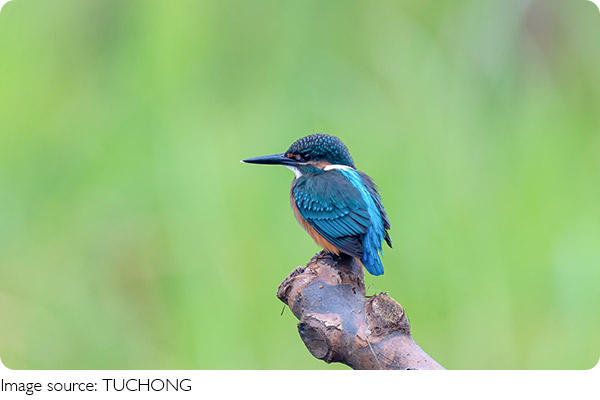
So, Readers, which kingfisher seems most remarkable—the precision diver, the hovering hunter, the colorful forest specialist, or the snake-catching kookaburra? The next time a kingfisher appears in a photograph, garden, wetland, or woodland, take a closer look. That flash of feathers may represent a very different survival strategy from the one most people associate with the name “kingfisher.”