Jaguars Rule the Rivers

Kwame Johnson
| 16-07-2026
 · Animal Team
Greetings, Readers! Picture a powerful spotted cat slipping silently from a muddy riverbank and swimming confidently toward prey hidden among floating vegetation.
For a jaguar, entering the water is not unusual but a natural part of everyday life. Unlike many cats that prefer to stay dry, jaguars regularly swim, hunt, travel, and cool themselves in rivers and wetlands.
This remarkable connection with aquatic environments has helped make the jaguar one of the most versatile hunters among the world's big cats.
Built for Landscapes Filled with Water
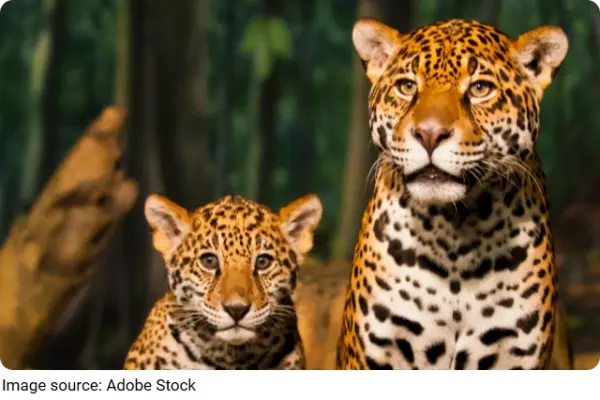
Jaguars (Panthera onca) are the largest native cats in the Americas. Their range includes tropical forests, seasonally flooded wetlands, savannas, and other habitats stretching from Mexico through parts of Central and South America. Many of their strongest remaining populations live in regions dominated by rivers and flooded landscapes, including the Amazon Basin and the Pantanal.
In such places, avoiding water would severely limit access to territory and prey. A jaguar's compact, muscular build is well suited to swimming. Powerful limbs generate propulsion, while the body remains remarkably stable in the water. Their broad paws also help them move effectively through muddy riverbanks and saturated ground. Rather than treating rivers as barriers, jaguars can use them as pathways connecting different parts of their home ranges.
Water Opens an Entire Hunting Ground
One major reason jaguars enter water so readily is simple: food. Their remarkably broad diet includes mammals, reptiles, birds, and aquatic prey. In wetland habitats, jaguars may hunt capybaras along riverbanks and prey on caimans in or near the water. Fish and turtles can also become available depending on local conditions.
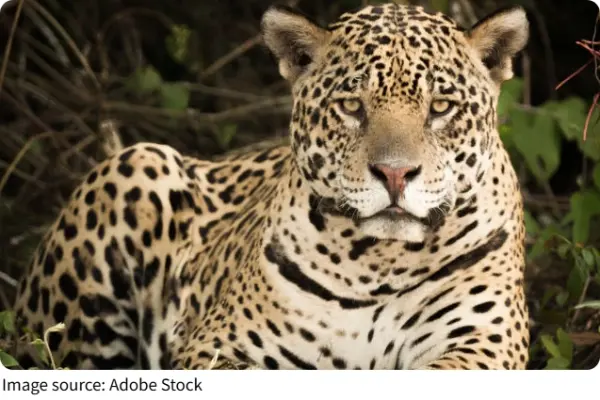
Hunting around rivers requires patience. A jaguar may quietly approach the shoreline under the cover of vegetation before launching a sudden attack. Its spotted coat helps break up the outline of its body in the shifting pattern of sunlight and shadow created by dense vegetation.
Jaguars have even been documented attacking caimans by approaching from positions that allow them to deliver a powerful bite before the reptile can escape. This ability to exploit both terrestrial and aquatic food sources gives the species unusual flexibility compared with predators that depend primarily on dry ground.
The Extraordinary Power Behind the Bite
The jaguar's hunting success is also connected to its exceptionally robust skull and powerful jaws. Unlike many large cats that commonly subdue substantial mammalian prey by gripping the throat, jaguars frequently use powerful crushing bites directed at the skull, neck, or other vulnerable areas, depending on the animal being hunted.
This technique is particularly useful when dealing with armored reptiles and turtles. Strong canine teeth and powerful jaw muscles allow a jaguar to break through or crush tough protective structures that would present a considerable challenge to many other predators.
Their name is often associated with raw strength, but their effectiveness comes from combining that power with stealth and precise positioning. Around waterways, this combination allows them to tackle prey ranging from large rodents to formidable reptiles.
Swimming Is About More Than Hunting
Water provides several advantages beyond access to food. In hot tropical environments, entering rivers and pools can help jaguars cool themselves. Waterways may also provide convenient travel routes through dense landscapes where thick vegetation makes movement on land more difficult.
Researchers have recorded jaguars crossing substantial rivers and other waterways, demonstrating that these cats are capable swimmers rather than animals that merely tolerate shallow water.
Their confidence around aquatic habitats also becomes particularly valuable in seasonally flooded environments. When rising water transforms forests and grasslands, jaguars can continue moving through landscapes that would become difficult for less adaptable terrestrial predators.
Why Jaguars Are Different from Many Other Cats
The idea that all cats dislike water is largely a misconception. Several wild feline species are capable swimmers, and some regularly interact with aquatic habitats. What makes the jaguar remarkable is how thoroughly water can be integrated into its ecological strategy.
In regions such as the Pantanal, waterways influence where jaguars travel, which prey they encounter, and how they move through their territories. Instead of remaining restricted to riverbanks, they may actively enter the water when conditions make doing so advantageous. This flexibility helps explain why jaguars can occupy such varied environments, from dense rainforest to open wetlands.
A Powerful Swimmer Still Needs Connected Habitat
Despite their physical strength and adaptability, jaguars face serious conservation challenges. Habitat loss and fragmentation can isolate populations by breaking large landscapes into smaller patches. Roads, agriculture, and expanding development may interrupt traditional movement routes, while direct killing associated with conflict and illegal wildlife trade creates additional pressure in some regions.
Protecting individual reserves is therefore only part of the solution. Jaguars require extensive territories, making wildlife corridors particularly important for connecting suitable habitats and maintaining movement between populations.
Healthy river systems also matter. Wetlands and riparian forests support the diverse prey communities on which jaguars depend while providing natural routes through otherwise fragmented landscapes.
Why Protecting Jaguars Protects More Than One Species
As top predators, jaguars occupy an important position within the ecosystems they inhabit. Protecting enough habitat for a wide-ranging jaguar can indirectly safeguard enormous landscapes containing countless other species. Forests, wetlands, rivers, and floodplains preserved for these cats also provide habitat for birds, reptiles, fish, and smaller mammals.
Their presence can additionally serve as an indicator that an ecosystem still retains enough space, prey, and environmental complexity to support a large predator. Conservation efforts therefore focus not only on preventing direct persecution but also on maintaining connected landscapes where jaguars can hunt, reproduce, and move naturally.
Jaguars do not enter the water simply because they happen to be good swimmers. Rivers and wetlands are deeply connected to how many jaguars hunt, travel, regulate body temperature, and navigate their territories. Their muscular bodies, powerful jaws, adaptable hunting techniques, and confidence in aquatic environments allow them to exploit opportunities that many other large predators cannot.