VR Gaming Revolution

Amit Sharma
| 08-04-2026
 · Science Team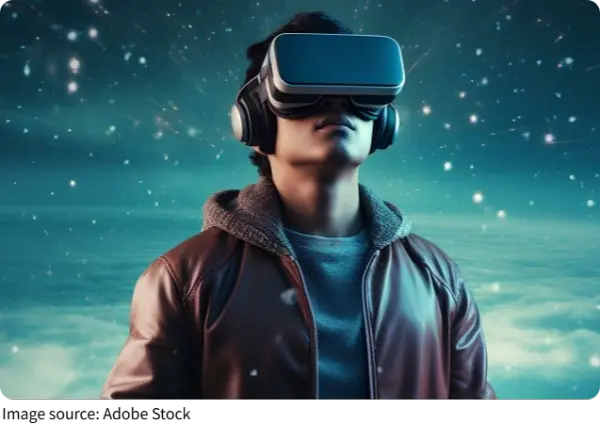
Introduction to VR Gaming
Virtual reality (VR) has transformed the gaming world, moving players from passive observers to active participants in fully immersive digital universes.
Unlike traditional gaming, VR places players inside the environment, enabling them to explore, interact, and react in real time. Whether dodging obstacles in a sci-fi adventure or solving intricate puzzles in a haunted mansion, VR brings a level of presence and excitement previously impossible. This technology combines motion tracking, spatial audio, and high-resolution visuals to create experiences that stimulate both the mind and body, making gameplay deeply engaging.
Key Features of VR Gaming
1. Immersive 360° Environments – VR games surround players with fully interactive settings. For instance, in exploration titles, players can turn, look up, or peek around corners, giving a sense of true presence in a forest, cityscape, or outer space station.
2. Realistic Interaction – Motion controllers allow players to pick up objects, swing swords, throw projectiles, or even mimic hand gestures. Actions that in traditional gaming are limited to button presses become fully embodied, enhancing engagement.
3. Social and Multiplayer Integration – VR games often include shared virtual spaces where players can collaborate or compete with others worldwide. Multiplayer VR platforms let friends meet in virtual arenas, complete cooperative missions, or simply socialize, creating a unique combination of gaming and social interaction.
4. Haptic and Sensory Feedback – Advanced VR controllers provide vibration and force feedback to simulate textures, impacts, and movement resistance. This feature heightens realism and makes challenges, such as dodging attacks or handling delicate items, more satisfying and immersive.
Popular VR Game Genres
VR technology has influenced nearly every game genre, adding new dimensions to classic experiences:
1. Adventure and Exploration – Titles like mystery-driven escape rooms or fantasy worlds encourage players to move physically, investigate environments, and solve layered puzzles.
2. Simulation and Sports – Flight simulators, driving experiences, or virtual tennis enable realistic skill practice in safe virtual spaces. Players feel the intensity of a race or a match without risk or travel.
3. Horror and Thriller – Immersive horror games make use of sound, limited vision, and environmental cues to amplify tension. Players experience suspense firsthand, often reacting instinctively to threats in the virtual world.
4. Fitness and Rhythm Games – VR exercise games integrate movement with music or game challenges, turning workouts into engaging, goal-oriented experiences.
Tips for an Optimal VR Experience
1. Select High-Quality Equipment – High-resolution headsets with accurate tracking prevent motion sickness and enhance visual clarity, making worlds feel lifelike.
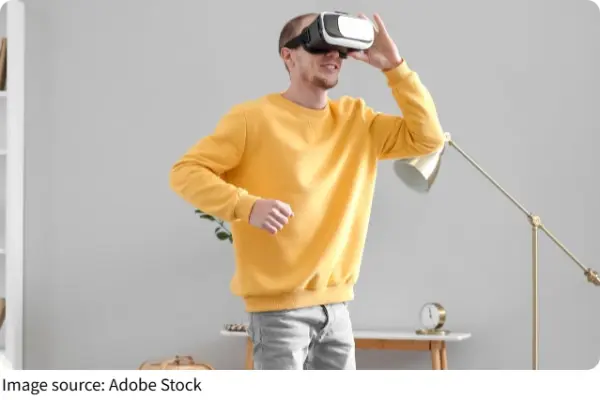
2. Prepare a Safe Play Space – Clear a room of obstacles and provide adequate movement space. Active games often require swinging arms, ducking, or stepping, so safety is essential.
3. Manage Session Duration – VR is physically and mentally stimulating; 30–60 minute sessions with breaks prevent eye strain and fatigue.
4. Explore Online Communities – VR forums, multiplayer servers, and social platforms offer tips, updates, and ways to connect with fellow players, enriching the gaming experience.
Reflection on VR Gaming
VR gaming exemplifies the evolution of interactive entertainment, blending technology, creativity, and physical engagement. It expands the possibilities of storytelling, competition, and collaboration, challenging traditional gaming boundaries. While it cannot completely replace real-world experiences, VR provides unparalleled immersion and excitement. The technology encourages players to explore new worlds, develop skills, and connect socially, demonstrating how innovation can redefine how we play, learn, and interact.