Fascinating Facts About Owls

Nolan O'Connor
| 02-03-2026
 · Animal Team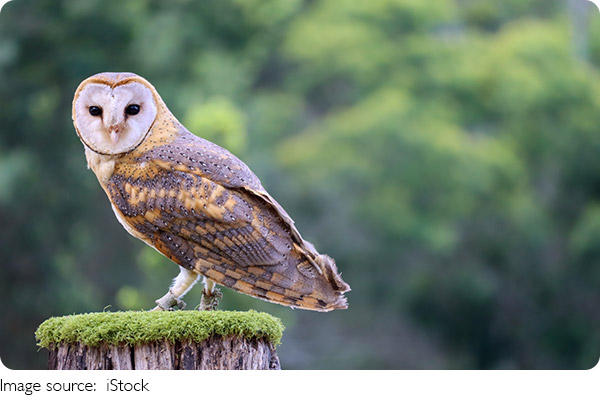
There is a quiet thrill in watching an owl glide silently through the night. Its sudden appearance, wide eyes, and almost ghostly flight have fascinated humans for centuries.
Beyond their mysterious aura, owls possess a series of incredible adaptations that make them exceptional hunters and survivors in diverse environments.
Anatomical Wonders
1. Exceptional eyesight
Owls' large forward-facing eyes provide excellent binocular vision, allowing them to judge distances precisely while hunting in low light. Some species can see in near-total darkness, making nocturnal hunting highly effective.
2. Silent flight
Specialized feathers with serrated edges break up air turbulence, enabling owls to fly almost silently. This adaptation allows them to approach prey unnoticed, a crucial factor for successful hunting.
3. Flexible necks
Owls can rotate their heads up to 270 degrees. This flexibility is possible because they have twice as many neck vertebrae as humans. It allows them to scan their surroundings without moving their bodies, reducing detection by both predators and prey.
Hunting and Feeding
1. Acute hearing
Many owl species have asymmetrically placed ears, enhancing their ability to pinpoint the location of sounds. This precision allows them to capture prey hidden under snow, leaves, or grass with remarkable accuracy.
2. Diet and digestion
Owls consume their prey whole, including bones and fur. They later regurgitate indigestible parts as compact pellets, which can be studied to learn about their diet and local ecosystem.
3. Stealth strategies
Owls often use a perch-and-pounce hunting method. They remain motionless, waiting for the slightest movement, and then swoop down silently. This patience is a key element of their hunting success.
Behavior and Adaptation
1. Camouflage and nesting
Owls often rely on plumage patterns that blend with tree bark or snow. This camouflage helps protect them from predators and enables them to ambush prey more effectively. They nest in tree cavities, abandoned nests of other birds, or cliff ledges depending on the species.
2. Territorial calls
Owls communicate with deep hoots, screeches, or whistles. These calls establish territory, attract mates, and even coordinate hunting activity, making their vocalizations essential for survival.
3. Adaptation to environments
From dense forests to arctic tundra, owls thrive in diverse habitats. Some species have developed seasonal migration patterns to cope with changes in prey availability, while others remain year-round residents, perfectly adapted to their niche.
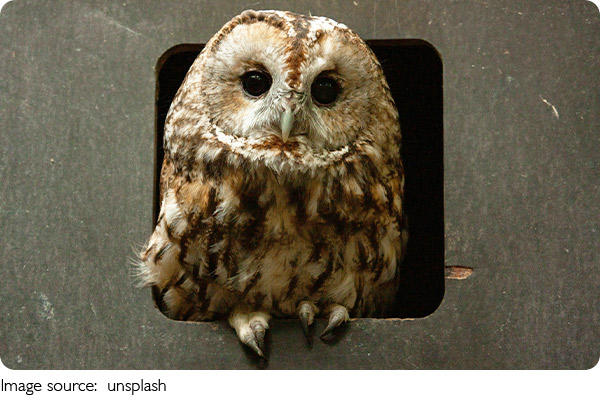
Observing owls in their natural environment reveals more than their mysterious beauty—it highlights a masterclass in evolutionary adaptation. Each silent flight, precise strike, and keen observation demonstrates their remarkable survival skills. Next time you encounter an owl, take a moment to appreciate the intricate design and behaviors that make these nocturnal hunters some of the most extraordinary birds in the animal kingdom.